
When Heat Pumps Work Well in the UK – And When They Don’t
Heat pumps have become one of the most talked-about technologies in the UK’s transition towards low-carbon heating. Rising energy costs, government incentives and increasing pressure to reduce carbon emissions have encouraged many property owners to consider moving away from traditional gas and oil-fired systems.
Yet despite the growing popularity of heat pumps, there remains considerable confusion around where they work best and what factors determine their performance. Some installations deliver excellent results, reducing both carbon emissions and energy consumption. Others fail to meet expectations, leading to disappointing efficiency figures and higher-than-anticipated running costs.
The difference often comes down to building suitability and system design rather than the heat pump itself.
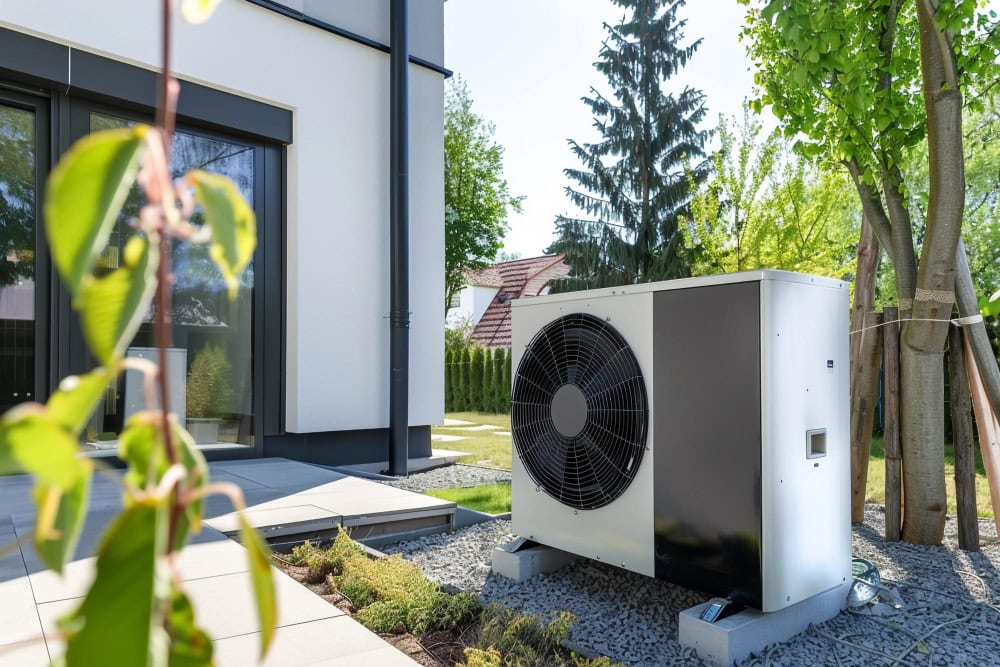
Heat pump in the garden
The Technology Is Proven – The Design Is What Matters
Modern air source heat pumps are capable of operating effectively throughout the UK, including during winter conditions. The technology is well established and widely used across northern Europe in climates comparable to, and often colder than, those experienced in Britain.
However, installing a heat pump should never be treated as a straightforward boiler replacement.
Traditional gas boilers are designed to produce high water temperatures, often between 65°C and 80°C. Heat pumps operate most efficiently at significantly lower temperatures, typically between 35°C and 50°C. The entire heating system must therefore be assessed to ensure it can deliver sufficient heat output at these lower temperatures.
This is why accurate heat loss calculations are critical. Without them, even a high-quality heat pump installation can struggle to achieve the expected performance levels.
Insulation Still Plays a Significant Role
One of the most common misconceptions is that every property requires extensive insulation upgrades before a heat pump can be considered.
While insulation certainly improves performance, the reality is more nuanced. Many existing buildings can successfully accommodate a heat pump without major refurbishment works. The key factor is understanding the building’s heat demand and designing the system accordingly.
Properties with excessive heat loss will require larger heat pumps, increased emitter capacity and higher operating temperatures. This can reduce overall efficiency and increase electricity consumption.
Before investing in any low-carbon heating technology, it is worth assessing:
- Roof insulation levels
- Wall construction and thermal performance
- Window specifications
- Air leakage rates
- Existing heating system condition
In many cases, relatively modest improvements can significantly improve system performance and reduce long-term running costs.
The Importance of Radiator Sizing
Radiators are frequently overlooked during heat pump discussions, yet they are often one of the most important elements of the system.
A radiator that performs adequately with water temperatures of 70°C may provide insufficient heat output when supplied with water at 45°C. This does not mean the property is unsuitable for a heat pump. It simply means the heat emitters may need reviewing.
Many successful installations involve upgrading selected radiators rather than replacing the entire heating system. In some situations, underfloor heating may also be introduced where practical, as it operates particularly efficiently with low-temperature heat sources.

Vaillant Arotherm Heat Pump
Running Costs Are More Complex Than Many People Assume
Heat pump manufacturers often promote impressive efficiency figures, commonly expressed as Coefficient of Performance (COP) or Seasonal Coefficient of Performance (SCOP).
While these metrics are useful, they do not directly determine running costs.
The economics of a heat pump installation depend on several factors including:
- Electricity tariffs
- Gas prices
- Building heat demand
- System flow temperatures
- Control strategy
- Occupancy patterns
A well-designed system operating at low flow temperatures can achieve excellent efficiency levels. Conversely, a poorly designed installation may consume significantly more electricity than expected.
For commercial properties already investing in solar PV systems, the financial case for heat pumps can become particularly attractive. Self-generated electricity can offset a portion of heating demand and improve overall return on investment.
Commercial Buildings Present Different Challenges
Heat pumps are often discussed in the context of domestic properties, but their application within commercial buildings requires additional considerations.
Factors such as occupancy patterns, operating hours, ventilation requirements and electrical infrastructure all play an important role.
For larger commercial premises, heat pumps may form part of a wider energy strategy incorporating:
- Solar PV systems
- Battery storage
- Building management systems
- Demand-side energy management
- Smart controls
Rather than focusing solely on heating costs, businesses are increasingly evaluating the overall energy performance of their buildings.
Electrical Capacity Can Become a Limiting Factor
One aspect frequently overlooked during early feasibility assessments is electrical supply capacity.
Heat pumps rely on electricity rather than fossil fuels, which means demand on the electrical infrastructure increases. In some commercial environments, existing supplies may already be operating close to capacity.
Before progressing with a project, it is advisable to assess:
- Available electrical capacity
- Distribution board capability
- Future load requirements
- Potential upgrades required by the Distribution Network Operator (DNO)
Addressing these considerations early can help avoid delays and unexpected project costs.

Heat Pump family choice
Heat Pumps and Future Building Regulations
The UK’s long-term direction of travel is clear. Building regulations continue to place greater emphasis on energy efficiency and low-carbon technologies, while fossil fuel heating systems face increasing scrutiny.
Although gas boilers are likely to remain part of the UK’s heating landscape for some time, developers and property owners are increasingly considering how future regulatory changes may affect their assets.
Installing low-carbon heating systems today can help future-proof buildings, improve environmental performance and support wider sustainability objectives.
Not Every Building Is an Ideal Candidate
Despite the benefits, heat pumps are not universally suitable.
Buildings with exceptionally high heat demands, limited outdoor space, restricted electrical capacity or complex heating requirements may require alternative solutions or hybrid approaches.
The most successful projects are typically those where a detailed assessment has been carried out before equipment selection begins.
Rather than asking whether a heat pump can be installed, property owners should focus on a more important question:
Can the heat pump operate efficiently within the specific characteristics of the building for the next 15 to 20 years?
Final Thoughts
Heat pumps are neither a miracle solution nor a passing trend. They are a proven technology that can deliver significant benefits when correctly applied.
The key to success lies in understanding the building, assessing the wider heating system and ensuring the installation is designed around real-world operating conditions rather than manufacturer specifications alone.
For businesses, developers and property owners planning long-term investments, heat pumps are increasingly becoming an important consideration as part of a broader strategy to improve energy efficiency, reduce emissions and prepare buildings for the future.